Problems That Can't Wait Until Morning
24/7 Emergency Septic Services in Cumming for system failures causing immediate property damage or operational shutdown
Septic emergencies happen when drain fields flood basements, when pumps fail and raw sewage backs into fixtures, or when distribution systems rupture and create surface discharge that violates health codes. Birddog Development, LLC responds to emergency calls in Cumming at any hour because septic failures don't follow business schedules and delays turn containable problems into extensive contamination events. Emergency service differs from routine maintenance in dispatch speed, diagnostic focus under pressure, and the need to stabilize systems temporarily when permanent repairs require daylight, dry conditions, or parts that must be ordered.
The work includes emergency pumping when tanks reach capacity and threaten to back up into buildings, troubleshooting pump electrical failures or mechanical seizures, clearing distribution line blockages, and identifying whether the emergency stems from component failure, drain field saturation, or inlet blockages that standard maintenance would have prevented. Coverage extends throughout Forsyth County and Gwinnett County, where properties on septic systems often sit outside municipal sewer service areas and have no alternative wastewater disposal option when systems fail.
Call immediately when you notice sewage odors indoors, slow drains across multiple fixtures, or wet areas above the drain field with visible effluent.
How Emergency Response Limits Damage
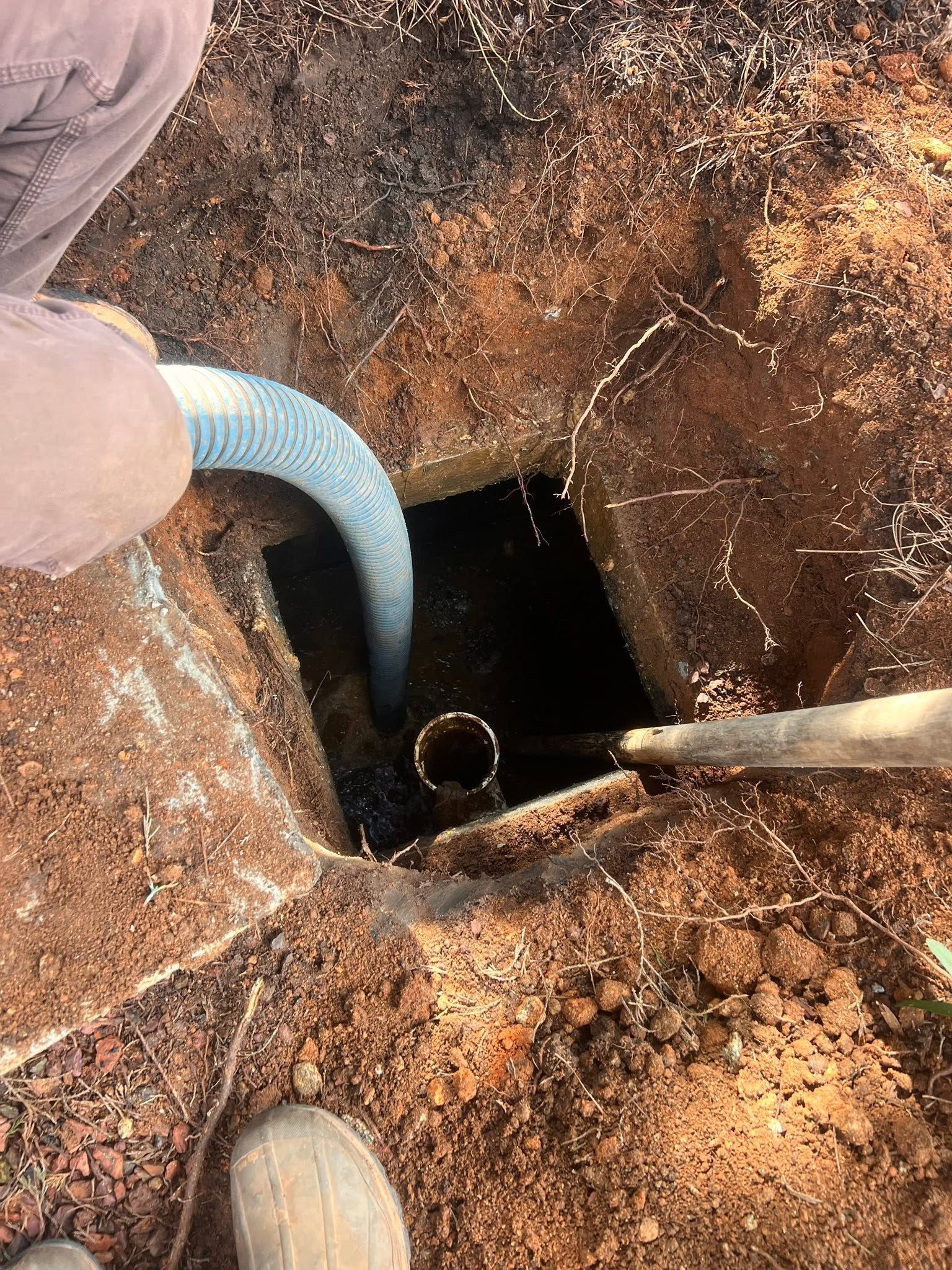
Emergency septic response prioritizes containment first, then diagnosis, then temporary stabilization until full repairs can proceed safely. The process begins with assessing whether the tank needs immediate pumping to prevent overflow, whether the pump requires replacement or just a reset after electrical issues, and whether the distribution system has blockages that can be cleared or leaks requiring excavation. For residential customers, the goal is restoring basic wastewater function so toilets and drains work until daylight allows detailed inspection; for commercial properties, emergency service focuses on maintaining operations even if that means scheduling multiple pump-outs while permanent solutions are engineered.
After emergency intervention, you notice fixtures drain normally again, sewage odors dissipate from indoor spaces, and effluent no longer surfaces in the yard. Response times matter because septic backups contaminate flooring, baseboards, and personal property within hours, while surface discharge attracts health department attention and can result in occupancy restrictions if the property cannot manage wastewater safely. In North Georgia's clay soils, saturated drain fields during winter or spring often trigger emergencies when the ground cannot absorb additional flow and effluent has nowhere to go except back toward the house.
Emergency service includes temporary solutions like arranging additional pump-outs on short intervals, installing external pumps when internal units fail, or bypassing damaged distribution lines until excavation and replacement can occur. The service does not include permanent drain field replacement or full system redesigns, which require site evaluation, permitting, and optimal weather conditions rather than middle-of-the-night crisis response.
Common Questions During Septic Emergencies
Customers facing urgent septic failures in Cumming need to understand what emergency service can accomplish immediately versus what requires follow-up work.
What qualifies as a septic emergency versus a problem that can wait?
Emergencies involve sewage backing into the building, visible effluent discharge on the property surface, complete pump failure that stops all drainage, or tank overflow that threatens structural flooding. Slow drains or minor odors typically indicate developing problems but don't require after-hours response.
How quickly can emergency septic service restore basic function?
If the problem involves a full tank, pumping restores drainage within an hour of arrival. If the pump failed electrically, resetting breakers or replacing obvious components takes less time than pumping. If the drain field is saturated or distribution lines are crushed, temporary restoration may require multiple visits while the ground dries or repairs are staged.
Why do septic emergencies often happen during heavy rain in Forsyth County?
Clay soils drain slowly, so sustained rainfall saturates drain fields and prevents effluent absorption, causing backups when the system has nowhere to send wastewater. Older systems without modern distribution designs concentrate flow in small areas that flood quickly during wet periods.
What should property owners do while waiting for emergency service?
Stop using water to prevent adding volume to an already failing system—no laundry, dishwashers, long showers, or unnecessary toilet flushes. If sewage has backed into living areas, avoid contact and ventilate the space. Do not attempt to open the septic tank yourself, as confined space hazards and toxic gases create serious safety risks.
When does an emergency septic call lead to discovering a system needs replacement?
Emergency diagnosis sometimes reveals tanks that have structurally failed, drain fields with zero remaining absorption capacity, or distribution systems damaged beyond repair. In these cases, emergency service provides temporary stabilization through frequent pumping until replacement can be planned and permitted.
Birddog Development, LLC maintains emergency response capability throughout Cumming and surrounding areas because septic failures create health hazards and property damage that worsen with every hour of delay. Contact us the moment you notice backup or discharge—early calls prevent most severe outcomes.