Systems Designed for Your Property's Conditions
Septic Installation in Cumming for properties requiring new waste treatment systems
Birddog Development, LLC installs complete septic systems for residential and commercial properties across Cumming and Forsyth County, addressing sites where municipal sewer connections are unavailable or impractical. The installation process begins with site evaluation to determine soil percolation rates, water table depth, and setback requirements that dictate which system type will function properly on your land. Properties with challenging conditions such as high water tables, rocky terrain, or limited drain field space require engineered solutions rather than conventional gravity systems.
Site evaluation determines whether your property supports a conventional septic system with gravity-fed drain lines or requires an engineered design using pump chambers and pressure distribution. Soil tests measure how quickly effluent absorbs into the ground, which directly affects drain field sizing and placement. Permitting coordination with the county health department ensures the proposed system meets setback distances from wells, property lines, and water sources before installation begins.
Schedule a site evaluation to determine which system design meets your property requirements and obtain a detailed installation estimate.
What Proper Septic Installation Requires
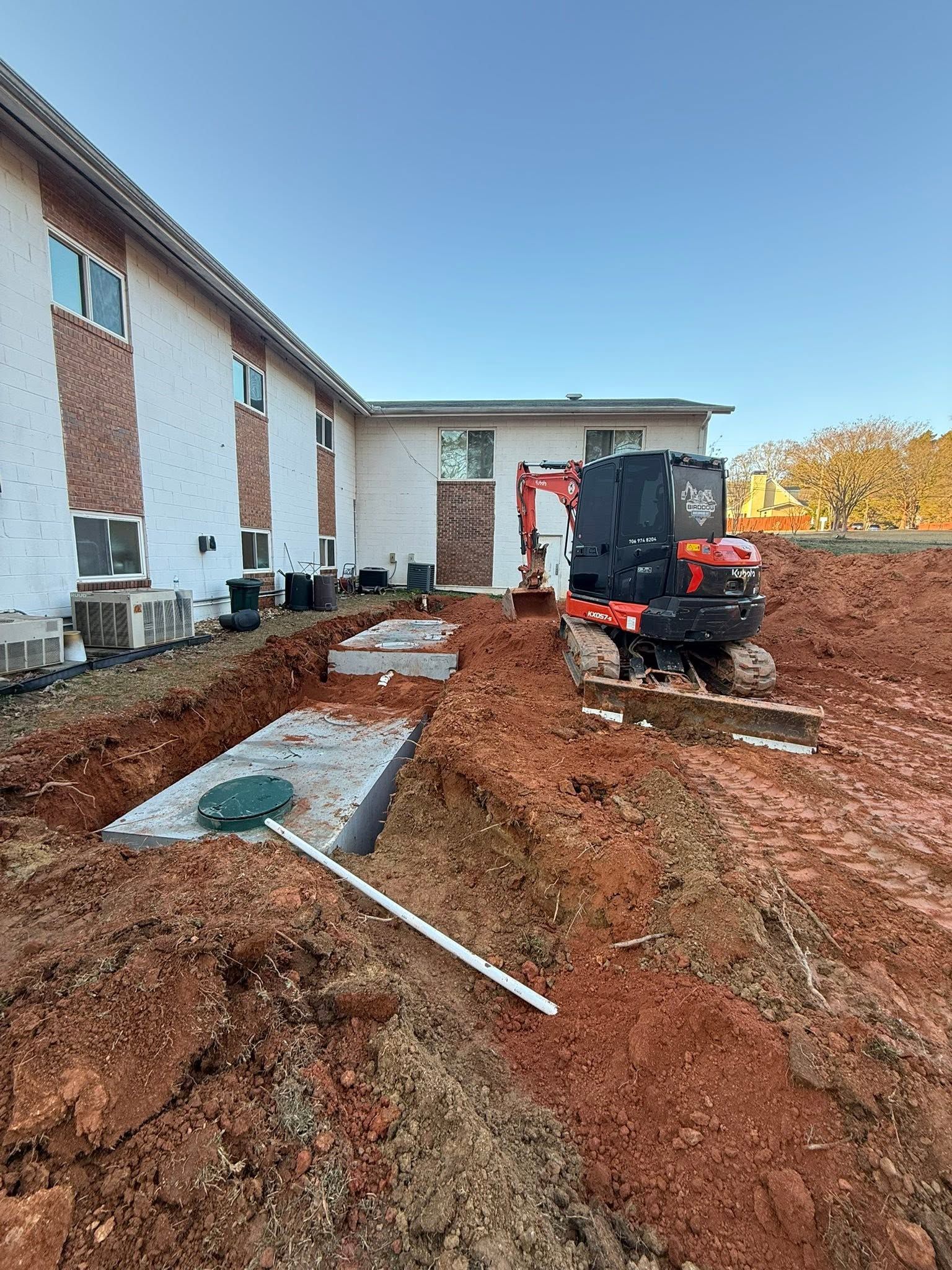
Conventional septic installation involves excavating the tank location, setting a concrete or polymer tank on a compacted gravel base, and installing distribution lines in trenches filled with washed stone to create the drain field. Tank sizing depends on property bedroom count and anticipated daily wastewater volume, with residential systems typically ranging from 1,000 to 1,500 gallons. Engineered systems add dosing chambers, float switches, and pressure distribution networks when soil conditions or site constraints prevent gravity drainage from functioning reliably.
After installation, you'll notice waste and water flow normally through household fixtures without backups, while the drain field remains visually unchanged at ground level except for inspection port covers. The system operates silently with no odor or surface pooling when properly sized and installed according to percolation test results. Engineered systems include audible alarms that activate if pump chambers reach high-water levels, alerting you to potential blockages before backups occur inside the structure.
Birddog Development holds both DPH and Elgin certifications, qualifying the company to install conventional gravity systems and specialty engineered designs that meet Georgia Department of Public Health standards. Installation includes final inspection coordination and system startup documentation that transfers to property records during future real estate transactions.
Questions Before Starting Your Installation
Property owners throughout Forsyth County and surrounding areas often ask similar questions when planning septic system installations.
What determines whether my property needs a conventional or engineered septic system?
Soil percolation rates measured during site evaluation determine absorption capacity, while water table depth and available drain field area dictate whether gravity distribution will function or whether pumps and pressure networks are required to spread effluent across a wider area.
How long does septic system installation take from permit approval to completion?
Installation duration depends on system complexity and weather conditions, with conventional systems typically requiring several days for excavation, tank setting, and drain field construction once permits are issued and site access is prepared.
Why do some properties in Cumming require mound systems instead of in-ground drain fields?
Properties with shallow bedrock, high seasonal water tables, or soils with slow percolation rates cannot rely on gravity drainage into native soil, so engineered mound systems raise the drain field above grade to provide adequate separation between effluent and groundwater.
What happens if the system fails inspection after installation?
Final inspections verify tank placement, distribution line grade, and drain field construction match approved permit drawings, with any deficiencies corrected before the system is covered and placed into service.
How does system size affect installation cost and long-term performance?
Larger tanks and extended drain fields cost more to install but prevent hydraulic overloading during high-use periods, reducing the risk of premature drain field failure caused by insufficient soil absorption area for actual wastewater volumes.
Birddog Development, LLC provides site-specific system design and installation throughout North Georgia, with expertise in both conventional and engineered septic solutions. Request a consultation to review your property conditions and obtain an installation estimate based on required system specifications.