Systems Built to Handle High-Volume Use
Commercial Septic Services in Cumming for properties requiring engineered systems and reliable uptime
Birddog Development, LLC provides commercial septic services in Cumming for offices, retail facilities, restaurants, and other properties where system failure creates immediate operational problems. Commercial applications differ from residential systems in flow volume, peak demand timing, and the financial cost of unexpected downtime. Engineered septic systems for commercial use require larger drain fields, high-capacity tanks, and often include grease interceptors or additional treatment stages depending on the facility type.
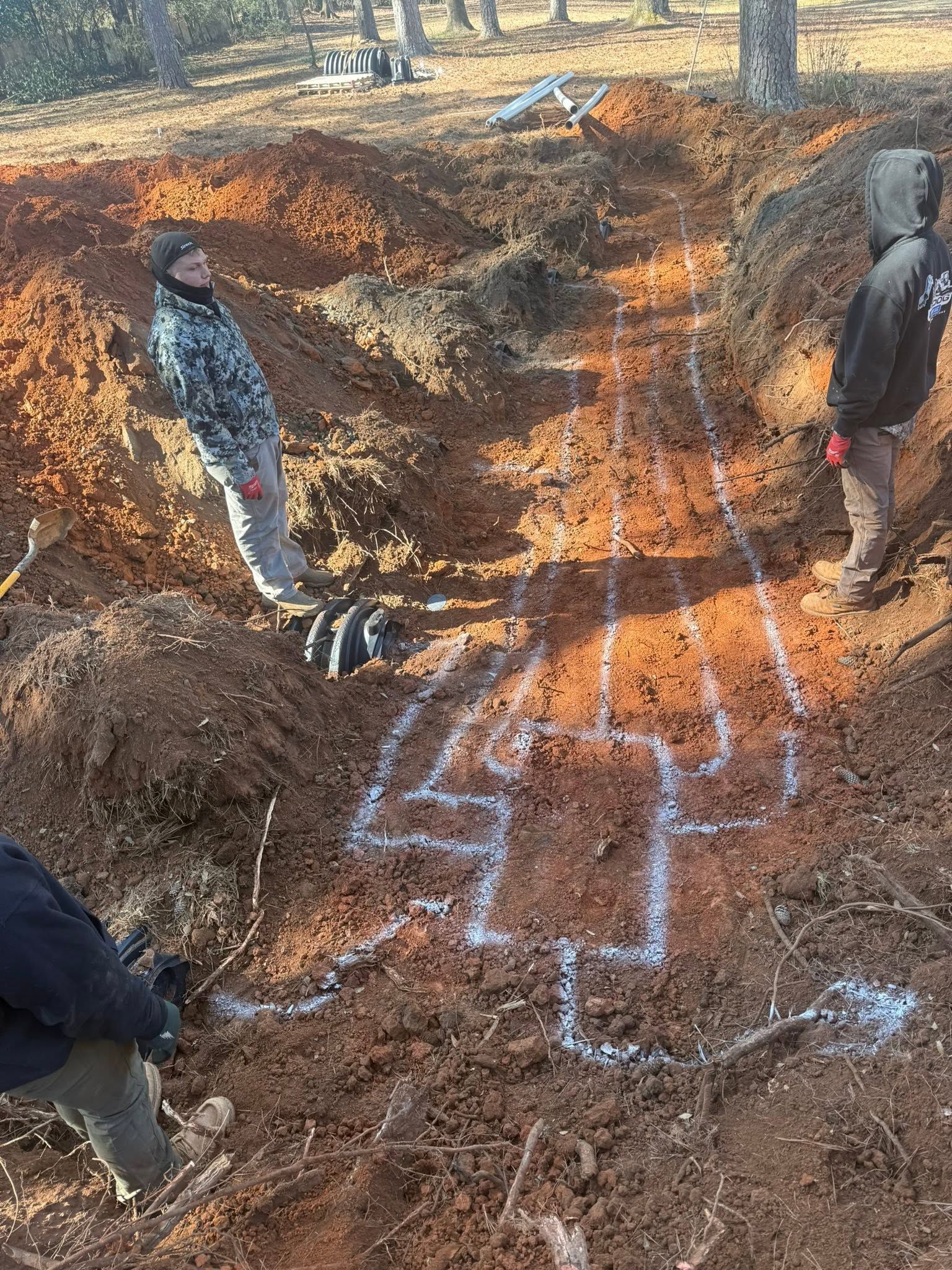
The work involves installation of systems designed to meet commercial flow rates, routine maintenance that prevents backups during business hours, repairs that address pump failures or distribution problems, inspections that satisfy health department requirements, and system upgrades when property use changes or capacity increases. In Forsyth County and Gwinnett County, commercial properties often face clay-heavy soils that require specific drain field designs to maintain adequate percolation rates under continuous use.
Schedule a site evaluation to review capacity requirements and system specifications for your commercial property.
What Dependable Commercial Septic Service Prevents
Commercial septic systems operate under sustained daily loads that residential systems never experience, meaning pump failures, clogged distribution lines, or drain field saturation create immediate problems for business operations. Preventive maintenance schedules are built around actual usage patterns—restaurants with high grease loads require more frequent pumping and interceptor cleaning than office buildings, while retail facilities with customer restrooms face peak demand surges that strain pump cycles and distribution timing. Inspection protocols track effluent levels, check pump float switches, test distribution valve function, and evaluate drain field absorption rates before minor inefficiencies escalate into system-wide failures.
After completing installation or major repairs, you notice wastewater drains consistently during peak business hours without slow fixtures or odor issues in parking areas. Birddog Development, LLC schedules maintenance around operational hours to avoid disrupting customer access or employee workflow. System upgrades become visible when additional capacity handles increased flow from facility expansions, new tenant types, or menu changes that alter wastewater characteristics.
The service includes tank pumping on a schedule determined by actual flow data, not generic intervals, and emergency repairs that restore function when pumps fail or distribution systems clog. Upgrades involve adding tank capacity, installing redundant pumps, or expanding drain fields when original systems no longer meet current demand, though not all properties have adequate land area for field expansion without advanced treatment components.
Questions Property Managers Ask About Commercial Systems
Commercial properties in Cumming face specific septic challenges related to soil conditions, facility type, and the need to maintain operations during service visits.
What determines how often a commercial septic system needs pumping?
Pumping frequency depends on tank size relative to daily wastewater volume, the number of employees and customers using facilities, and whether the property includes grease-producing operations or high-solids waste. A restaurant may require monthly service while an office building operates effectively on quarterly schedules.
How do engineered septic systems differ from standard residential installations?
Engineered systems use dosing chambers that release wastewater in timed intervals rather than continuous gravity flow, pressure distribution networks that ensure even drain field loading, and often include aerobic treatment units or sand filters to handle higher biochemical oxygen demand from commercial waste streams.
Why do commercial systems fail during peak business periods?
Pump float switches stick due to grease accumulation or debris, distribution valves clog when solids enter effluent lines, or drain fields saturate when clay soils in Forsyth County slow percolation rates during wet seasons, causing backups when demand is highest and the system lacks capacity to queue additional flow.
When should a property owner consider system upgrades rather than repairs?
Upgrades become necessary when tank capacity no longer matches current flow data, when tenant changes introduce different waste characteristics the original system wasn't designed to process, or when repeated pump replacements indicate undersized equipment rather than component failure.
What happens during a commercial septic inspection?
Inspections measure scum and sludge layer depths to determine pumping urgency, test pump operation under load, check distribution system pressure balance, evaluate drain field surface conditions for ponding or odor, and review maintenance records to identify patterns that suggest systemic problems rather than isolated incidents.
Birddog Development, LLC schedules service appointments during off-hours or low-traffic periods to minimize impact on daily operations. Contact us to establish a maintenance schedule based on your facility type and documented usage patterns.