Sites Prepared for Drainage and Access
Land Grading and Clearing in Cumming for properties requiring proper drainage slopes and vegetation removal before construction
Septic system installation and site development require specific ground contours and cleared work areas that natural topography rarely provides, particularly on wooded properties or sites with irregular drainage patterns. Proper grading establishes slopes that direct surface water away from drain fields and buildings while creating level areas where tanks and distribution equipment can be installed at design elevations. Clearing removes trees, brush, and root systems that would interfere with excavation equipment access and underground system components. The site preparation work happens before septic installation or building construction begins, creating conditions that allow proper installation and long-term system function. Birddog Development, LLC provides grading and clearing services for residential and commercial projects in Cumming and throughout North Georgia, coordinating this preparation work with excavation schedules and septic system installation timelines.
The grading process involves cutting high areas and filling low spots to achieve target elevations, then compacting disturbed soil to prevent future settling that would alter drainage patterns or damage buried systems. Clearing includes removing vegetation and root systems from work areas, with disposal or on-site management of cleared material depending on project requirements and available space. Sites with significant grade changes may need retention walls or erosion control measures to stabilize slopes and protect the finished work.
Schedule a site evaluation to determine what grading and clearing your property requires before septic system installation or construction begins.
What Proper Site Preparation Prevents
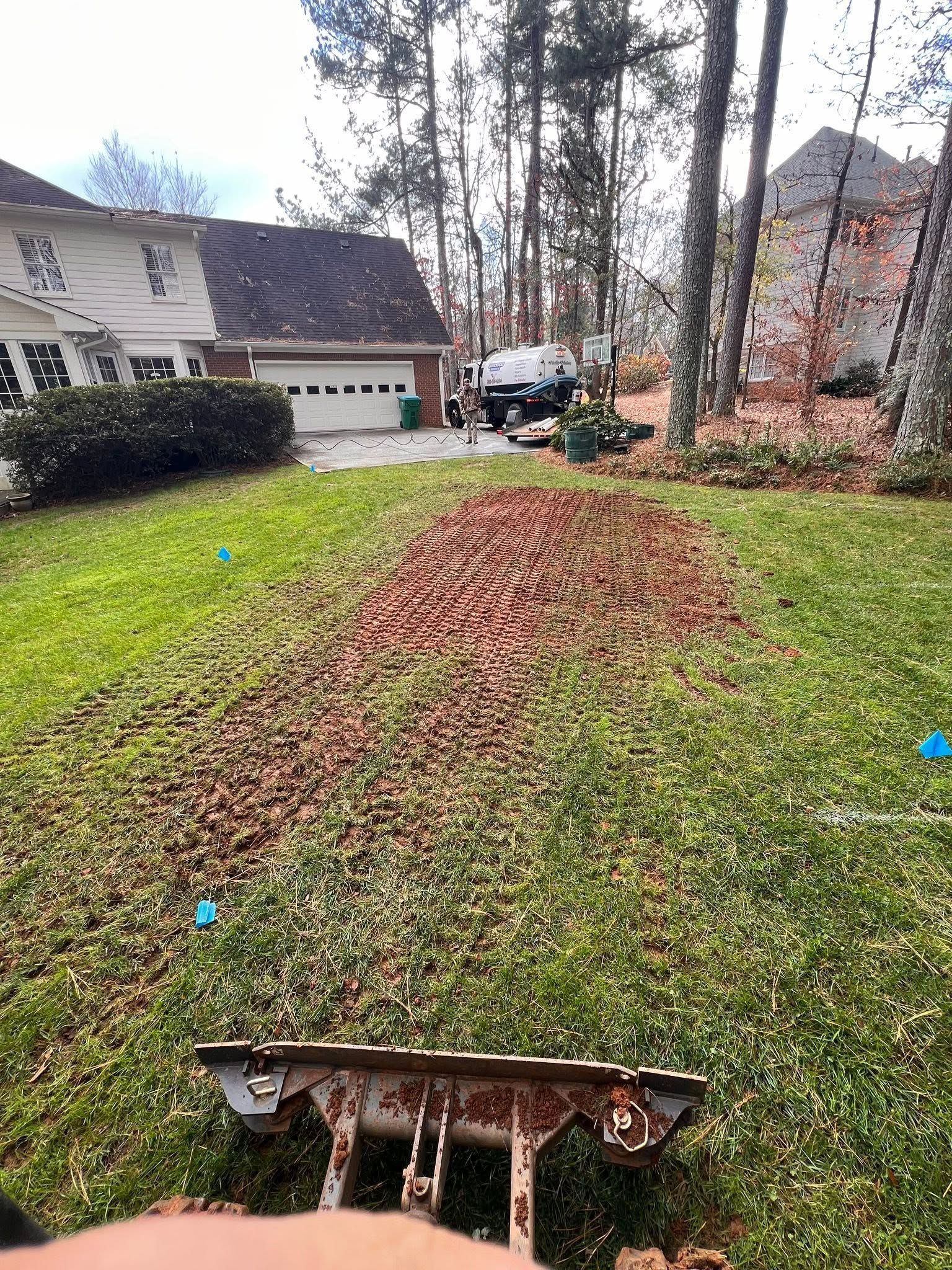
Grading creates drainage patterns that keep surface water from pooling above drain fields or flowing toward building foundations, which matters because saturated drain field soil prevents proper effluent treatment and foundation water intrusion causes structural damage. The work establishes slopes of one to two percent in critical areas—enough to move water reliably but not so steep that erosion becomes a problem. Sites with heavy clay soil common in parts of North Georgia need careful grading because these soils shed water rather than absorbing it, and even small grade errors create persistent drainage problems.
After grading completes, your property has defined high and low areas that control where water goes during rain events, excavation equipment can access work areas without creating ruts or getting stuck, and septic system components can be installed at elevations that allow gravity flow where applicable. The cleared areas provide room for equipment operation and material staging, which matters for project efficiency and avoiding damage to portions of the property that will remain undisturbed. You see a site ready for construction rather than raw land requiring extensive preparation work after other contractors have mobilized.
The preparation also addresses accessibility for future maintenance needs. Septic tanks and pump chambers require periodic access for pumping and servicing, and grading establishes routes that service vehicles can navigate without damaging landscaping or getting stuck in soft soil. Commercial sites with larger systems particularly benefit from maintained access paths that allow tanker trucks and equipment to reach system components regardless of weather conditions.
Common Site Preparation Questions
Property owners planning construction or septic installations need to understand what site preparation involves and how it affects project success and long-term system performance.
What determines how much grading a site needs before septic installation?
The existing topography compared to required finish grades drives the scope, with steep slopes requiring more cut and fill than relatively flat sites. Septic drain fields need reasonably level installation areas to distribute effluent evenly, while gravity-flow systems require specific elevation differences between tanks and distribution areas. Sites with natural grades that oppose these requirements need more extensive grading than sites where existing contours already approximate target conditions.
How does clearing differ from basic lot preparation?
Clearing for septic installation removes all vegetation and root systems from work areas because roots interfere with excavation and later grow into buried system components, while basic lot clearing might leave stumps or root systems in areas away from immediate construction. The clearing extent depends on system layout and equipment access requirements, typically extending several feet beyond actual component locations to provide working room.
When should grading happen relative to other construction activities?
Grading precedes excavation and system installation because proper grades are required before component elevations can be established. However, final finish grading often waits until after installation completes so that any soil disturbance from system work can be incorporated into the final surface contours. The timing gets coordinated with weather patterns when possible, since grading bare soil during rainy periods creates mud and erosion problems.
Can grading correct drainage problems on existing properties?
Properties with poor surface drainage can benefit from regrading that redirects water away from problem areas, though the work may be limited by existing structures, landscaping, and buried utilities. Small grade changes often make significant differences in surface water management, and sometimes adding swales or berms accomplishes drainage goals without extensive regrading.
What happens to cleared vegetation and excess soil?
Organic material like brush and small trees can be chipped and spread on-site if space allows, used for erosion control, or hauled away for disposal depending on volume and project preferences. Excess soil from cuts can fill low areas elsewhere on the property, be used to build berms or landscaping features, or be removed if it's unsuitable material or if the site has no use for additional fill.
Efficient site preparation creates the foundation for successful septic installations and construction projects while establishing drainage patterns that protect your investment long-term. Birddog Development, LLC coordinates grading and clearing work with excavation and installation schedules, providing complete site development services for residential and commercial projects. Arrange a consultation to review your property's preparation requirements and receive a detailed project proposal.